High Risk Alert
Read the full alert carefully and follow the recommended guidance. Where an official regulatory notice is available, use the original source for the authoritative notice.
What You Should Know
Public safety alerts in Nigeria have historically focused on counterfeit antimalarials and antibiotics. However, official data released by the National Agency for Food and Drug Administration and Control (NAFDAC) reveals a major shift in the illicit market.
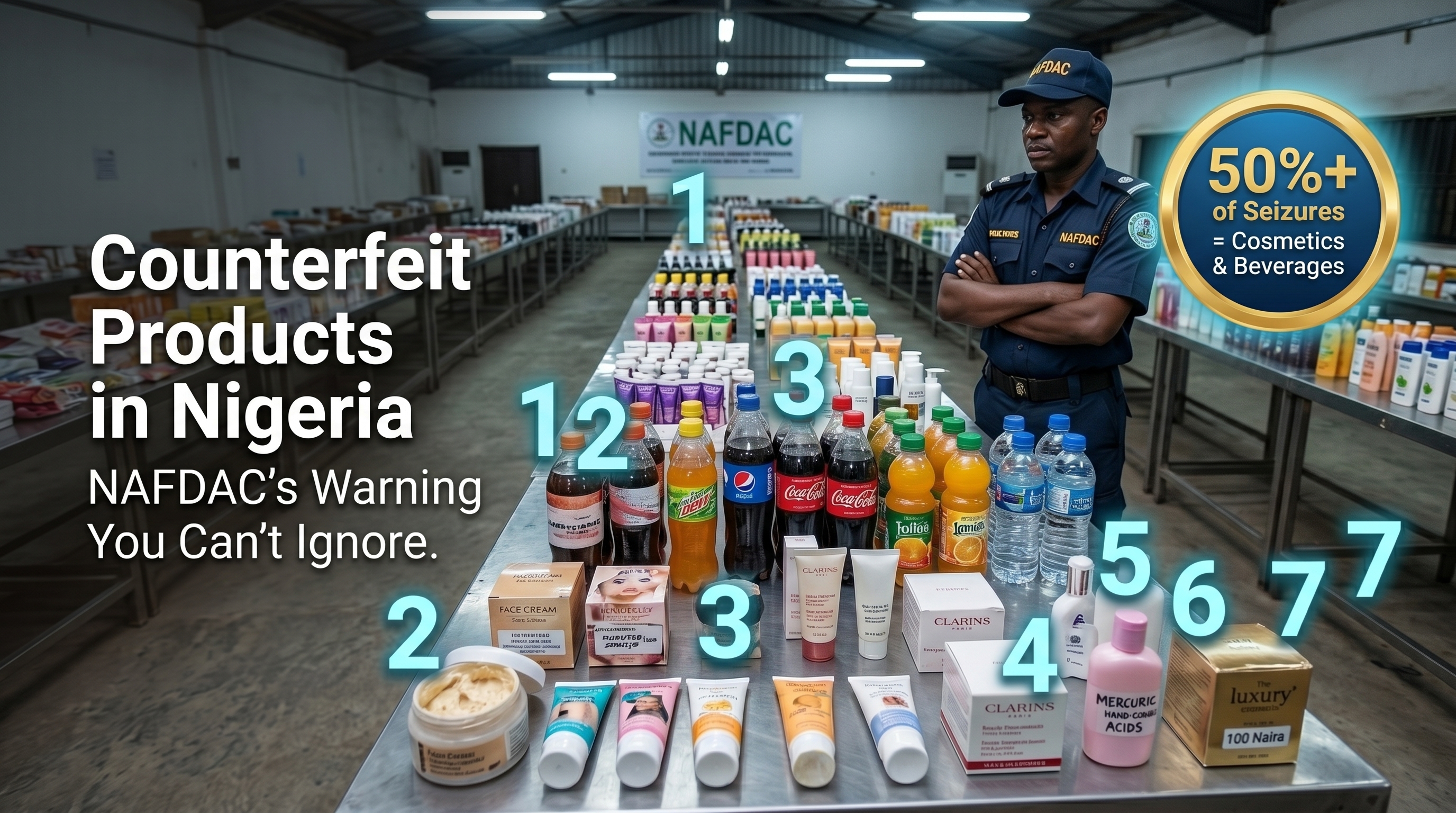
During a press briefing to mark International Anti-Counterfeit Month, NAFDAC disclosed that fake cosmetics, food, and beverages now account for over 50% of all counterfeit products seized across the country.
Substandard daily consumables have officially overtaken regular pharmaceuticals in total volume. This growth places millions of everyday shoppers at immediate risk.
How the Fake Product Supply Chain Has Changed
The logistics behind the distribution of counterfeit products in Nigeria have evolved. According to NAFDAC’s Investigation and Enforcement Directorate, criminal syndicates no longer need to travel overseas to establish factories or manage shipments.
Instead, bad actors use online procurement networks to order custom falsified goods directly from overseas manufacturers, primarily located in Asia. To slip past border checkpoints, these networks use a shipping tactic known as cargo consolidation or groupage. Under a groupage arrangement, multiple business owners share a single shipping container. Counterfeiters use this method to mix illegal batches of skin creams, packaged foods, and alcoholic drinks with legitimate goods, making it highly difficult for port inspectors to find them.
High-Risk Consumable Categories and Health Risks
Because manufacturers of counterfeit products clone packaging with extreme accuracy—often printing cloned registration numbers—consumers must be highly alert across these three primary sectors:
1. Counterfeit Cosmetics and Skincare
Skin-lightening creams, luxury lotions, and body washes are the most heavily counterfeited items in the consumer market. To cut down production costs and show fast results, illegal mixers lace these lotions with banned, toxic chemicals like hydroquinone, mercury, and high-dose steroids. Long-term skin exposure to these substances causes permanent skin thinning, severe chemical burns, and systemic organ damage.
2. Adulterated Alcoholic and Packaged Beverages
The production of fake wines, spirits, and soft drinks remains common near major commercial points like the Trade Fair Complex in Lagos, Aba, and Onitsha.
Counterfeiters collect discarded glass bottles from the streets, refill them with unpurified water, industrial dyes, and cheap ethanol, and reseal them. Ingesting these unwholesome mixes can cause instant alcohol poisoning, blindness, and liver damage.
Source
This alert is published on VerifyProduct.ng for consumer awareness. Where an official regulatory source is available, consult the original notice for the authoritative information.
Share this safety alert